



Author Archives: Chris B

Digital Customer Surveys

You can reach more of your customers by sending an SMS to start a survey. But why conduct a survey?

Ten reasons why surveying your customers can take your business to the next level.

The battle for client loyalty and retention is becoming increasingly fierce among brands, making your job more challenging and more time-consuming.

You can learn a lot about your company’s performance from the feedback you receive from your customers.

When customers buy one of your products or services, they can tell you what’s wrong with it and what can be done to fix it. It’s an excellent opportunity to conduct a survey.

1. Customer loyalty measurement

The difference between the best and worst brands is based on how loyal their customers are to them. A great example would be companies such as McDonald’s, or Apple, who create dependency on their brands.

Many customers are so devoted to their products and services that they continue to use them to the end of their lives. For long-term business success, that’s precisely what you should be aiming for.

The Net Promoter Score (NPS) is a terrific approach to finding out how devoted your customers are to your brand. This index ranges from 0 to 100 and informs you of the average willingness of your customers to suggest and share your products and services.

To activate the NPS data, your consumers should be asked,

“How likely are you to suggest our products, services, or brand to your friends, neighbours, or clients?”

Allow them to select between 1 and 10 as their options. These are some of the advantages of doing so:

  • It’s important to keep an eye out for consumers who select between 9 and 10.
  • Find out who is dissatisfied with your service and get some suggestions for improvement.
  • People who fall between satisfied and unsatisfied should be targeted for more personalised content.

To meet your specific needs, NPS surveys can be quickly set up and customised in Mailmaster.

2. Identifying the methods used to find new customers

If you want to optimise the ROI of your marketing strategy, you need to know where your customers are coming from first. You may learn a lot about your top sources of clients by surveying your current and potential customers.

You can reach as many targeted clients as you desire by researching to determine your most successful distribution channels.

3. Identifying repetitive purchase patterns

Your customers’ purchasing habits can provide you with a wealth of information that you can use to your advantage in various ways.

Find out where your customers enjoy shopping and make a list of all your competitors. Allow them to make their own choices and discover which of your competitors are obstructing your customers’ progress.

In addition, you might inquire as to how your customers obtained your goods or services. Allowing customers to choose from a variety of options, such as:

  • Shop Website
  • App
  • Social media (plus one)
  • Catalogues

From their answers, you can learn how to serve their needs better and improve their shopping or service experience.

4. Analysing why your potential customers aren’t making a purchase or engaging in your service.

It is possible to identify and re-engage customers who have abandoned your sales process by conducting surveys. Even though they may have read your emails and downloaded a few freebies, they may have gotten trapped in the order process.

You can discover why they rejected your offer by asking the correct questions. Find out why they left by looking for clues in their answers. In addition, you can use these surveys to find out what motivates your customers to return and buy from you again.
Digital Customer Surveys

5. Having an understanding of what is most important

The focus here is on market research. Companies of all sizes are pouring millions into market research. Is there a reason for it?

You must know, see, hear, understand, feel, and think like your customers to provide them with what they desire. You must become intimately familiar with them in the same way that you must become familiar with yourself. It is possible to elicit a wide range of responses to the issue of ‘what your customers desire most’ through innovative and creative marketing surveys.

6. Getting customer opinions on your products and services

Your company’s name, logo, messaging, and goods are all important. So, how exactly do you conduct a survey, and why would you want to?

To take a closer look at each. Feedback on your products and services is best obtained from previous customers who have already purchased or used your products or services.

The information they provide can assist you in better understanding the quality of your products or services, how well they meet your clients’ needs, and the features that might be added or improved to make them even more effective.

7. Understanding the buying process

How do you know how your customers feel about your product or service once they’ve used it?
You must care about your customers to build stronger relationships with them. When customers see that brands care about them, they tend to be more loyal.

Allow customers to assess their experience with your product or service from 1 to 10 using a customer satisfaction survey. As long as you are open to hearing what your customers have to say, your company’s worth and influence will increase much faster than you expect.

8. Easy-to-use tool for identifying target audiences

SMS and email marketing should not be overlooked. It’s through email that companies will be able to share their most intimate details as well as their most precious assets.

For email communication to be effective, you must tailor the user’s experience by sending personalised emails. Your email subscribers’ nature, behaviour, actions, and interests are tagged and marked so that you may identify and target your most loyal consumers.

The more specific your options are, the better you’ll be able to target your large audience, so you should conduct a poll amongst your email subscribers. You may personalise your email sequence and significantly increase your conversions when you have that.

9. Sharing your best customers’ referrals to help you grow your business

Brand advocates can come from customers who are devoted followers of your content, products, and services.

You have a brand advocate when someone is willing to spread the word about your products and services to help your brand grow. You may be able to offer a special incentive to some of your consumers in exchange for their loyalty.

10. Creating a channel of communication between your company and your customers

Developing good brand-to-customer communication means that you must be able to communicate whenever you or your customers need to.

You can keep in touch with your customers and prospects via email, social media, and the phone. As long as you show that you care about your customers, they’ll be happy.

Consider using open-ended questions in your surveys to keep respondents interested. You or one of your employees can send a personalised letter to your consumers, addressing their specific concerns and wishes.

Why you should conduct surveys.

The skill of knowing, caring for, and making money from your consumers is a complex one. Instead of focusing on the end goal, consider your customer connection as a journey. Bonding requires patience, open communication, and trust.

Your consumers will remember you if you give them the best experience they’ve ever had. People will remember you if you stand out from the crowd. By showing that you care, you’ll be able to acquire their trust.

Always ask for help, and don’t look back. Survey, respond, use the data, optimise, and scale. Wishing you the best of luck in your future endeavours!

Discover More
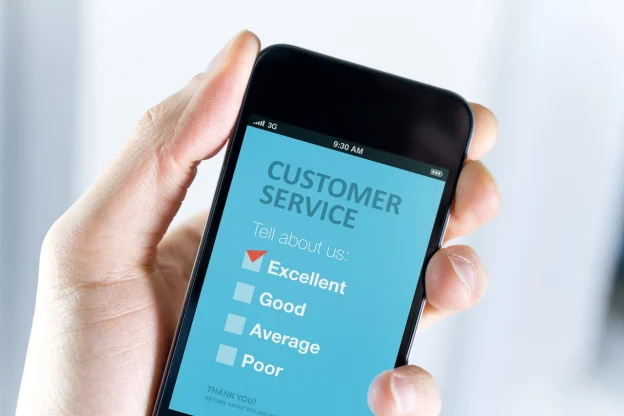
In order to communicate with your clients in the digital world, we make use of today’s mobile technology.

This decade’s shift in customer expectations for on-demand services delivered via mobile devices has fundamentally altered how businesses interact with their customers.

Today’s customers want digital experiences tailored to their specific needs and include relevant contextual interactions. They want such experiences to be available to them at any time, from any place.

An urgent need to adapt to a digital work style in the consumer communications sector is reflected in this change. Despite the desire of many businesses to go mobile and better serve their customers, many are unable to put this digital strategy into action. Client loyalty can only be maintained and increased by providing innovative on-demand digital service experiences that their clients enjoy.

It is becoming increasingly difficult for businesses to create trust with their customers because of changing behaviours. On the other hand, customers are increasingly turning to digital and mobile self-service channels to perform many of their old offline duties, which is now expected in the corporate communication industry. Customers also want to be able to undertake a wide range of online activities using a number of mobile app features. Businesses that don’t embrace mobile interaction risk losing customers.

To gain the trust of customers, companies must increase their mobile engagement efforts.

Engagement is becoming less reliant on existing relationships due to the move to mobile and digital. When building customer loyalty, organisations need to take advantage of these channels and provide personalised touchpoints. As part of their customer interaction strategy, fewer than 30% of senior corporate decision-makers claim their companies have a ‘mobile-first’ strategy in their thinking and implementation.

In today’s fast-paced climate, businesses face a problem developing effective mobile engagement strategies.

They can’t seem to get past the basics when it comes to creating mobile apps disconnecting and misaligning their mobile and non-mobile engagement methods.

As a result, firms face an uphill battle in developing effective mobile engagement strategies in a dynamic market. Increasingly, customers choose to communicate with companies via the mobile channel and use self-service tools. For over half of mobile app users, delivering personalised recommendations via their preferred channel is a challenge. Regulatory changes also add to this disruptive effect. An ever-present difficulty in the sector is the need for business partners who are as familiar with the regulations as the decision-makers themselves.

Mobile app development is a challenge for companies because they have to keep up with the fast-changing expectations of their customers and are influenced by their daily lives and interactions. However, many still struggle with the fundamentals. Authentication is like closing your business’s front door to your clients, according to most firms’ users. Mobile engagement should offer no obstacles to entry for users when it comes to direct customer communication.

As pressure builds to produce greater results, customer mobile engagement takes centre stage.

Mobile engagement activities will necessitate an increase in investment. You must know what matters most to your clients in order to increase mobile engagement, and you must direct your efforts toward that goal. From enhancing mobile app functionality and improving user experience to utilising the wider ecosystem and developing new sources of value through digital partnerships will implement initiatives across the board.

Utilise time-saving and cost-effective methods to engage your mobile customers to their fullest potential.

The majority of business leaders are interested in further developing and enhancing the various technology blocks that support customer mobile experiences. The importance of forging alliances with service and technology suppliers as ‘high’ or ‘important.’  They are hoping that these new collaborations and better integration will better translate their present mobile data into actionable customer experience insights and increase consumer engagement.

Conclusion:

Consider the following in order to increase client satisfaction:

In an age where customer expectations are constantly shifting, simply altering the mobile experience won’t cut it. Customers’ shifting expectations necessitate the use of existing technologies that offer a comprehensive range of unique customer experiences integrating your mobile and non-mobile initiatives.

Innovative and alternative mobile app features can help you win over your clients’ hearts and minds. Engage customers in their local surroundings and tailor their experience by experimenting with collaborative features.

Streamline and accelerate the development of high-quality, consistent user experiences. Look to the outside world for ways to speed up innovation by integrating digital technology with your current mobile capabilities.

In order to communicate with your clients in the digital world, we make use of today’s mobile technology.

Client Management

Best practises in client management modernisation

Discover insights and best practices for preparing your client-facing organisation for the digital age.


Client Management


According to FORBES, 87% of corporate leaders believe technology will disrupt their industry, but only 44% believe they are prepared.

That’s good news for inventive leaders because digital technology makes it easier than ever for businesses to improve their management processes.

Digital transformation can revolutionise company operations, making organisations more transparent, efficient, and capable of better serving their customers, outcompeting late adopters and capturing their market share.

Workflows enable organisations to improve and streamline the whole client lifecycle by automating mundane processes.

Improve Efficiencies with Customer Interaction Workflows While client-facing digital interactions have become increasingly common in consumers’ daily lives, customer interaction workflows can improve the complete end-to-end business lifecycle for high-touch service experiences.

Consider a financial services firm that provides clients with access to their own branded portal. They can phone or text advisors (skipping the wait music), begin conversations, schedule meetings, electronically sign legal papers, and do anything else relating to their business needs.

Furthermore, they would gain a thorough knowledge of the history of encounters. This paves the path for improved customer service. Businesses must manage customer accounts where personalised relationships are essential for quality service delivery. Organisations can manage the whole client lifecycle with an all-in-one platform for account onboarding, servicing, and exception handling.

Transparency and efficiency

Customers may interact while doing business with companies more easily because of digital transformation, but this is just half of the problem. Organisations now have unparalleled levels of openness and efficiency thanks to digital. Disparate, disconnected technology, on the other hand, adds to the turmoil and makes it difficult to track and administer a complete one-stop solution to managing client business from beginning to end.

Digital techniques provide senior managers and business owners with a level of knowledge and control over their operations that traditional systems cannot offer. Businesses could totally restructure their processes to decrease costs, retain customers, and lead in their industry by controlling the whole customer lifecycle in one platform.

  • Companies can also use task lists to streamline their service operations.
  • Keep every employee that has contact with a client up to date on the client’s requirements.
  • Identify process gaps in order to improve them.
  • Determine procedures that increase customer loyalty (confirming what works).

A one-stop simple digital transformation provides a significant reward because it improves the customers’ experience while also allowing businesses to optimise internal processes for an even more effective organisational practice.

Workflow Automation

Businesses may organise structured and unstructured communications with a digital workflow-centric solution to manage high-touch customer interactions. Companies can automate typical tasks and processes by customising workflows for their operations, thereby optimising the entire customer lifecycle to meet deadlines. On-demand automated procedures also eliminate human error in operational processes. Companies may provide individualised, Just-In-Time (JIT) service while increasing efficiencies by handling exceptions and escalating high-touch contacts.

The JIT Model and Digital Management

JIT delivery is a model commonly used in logistics and manufacturing, but its reach is much broader. A retail store, for example, may use previous data on product sales to order just the correct number of a given item to keep up with consumer demand without over-ordering things that will not sell or wasting anything with a sell-by date.  This lowers company costs and boosts their bottom line.

JIT for Service Industries

In customer service industries such as banking, healthcare, and other high-touch sectors, the JIT strategy is particularly effective.

Customers in many businesses have enquiries and demand 24 hours a day, seven days a week; however, it is usually not economically practical to staff organisations around the clock.

Even during typical business hours, the need for client help fluctuates. Significantly decreasing or eliminating hold times could necessitate overstaffing most of the time. Customers may get their questions answered on the spot, but workers would be idle during downtimes, and the cost would be considerable.

Service on-demand vs Just-in-time Service

The on-demand model might deplete resources because customers do not always want an instant answer to their inquiries. With a JIT service experience, organisations can automate workflows to access routine services on their own time, allowing customers to escalate to representatives as necessary without depleting resources. Customers can contact the company whenever they need to and obtain a JIT, personalised service.

Furthermore, because management has access to every discussion, request, and unanswered query, they may use this information to improve the service. As a result, the customer receives an efficient, smooth JIT service that enhances the customer experience and promotes customer retention.

Businesses Call, But People Text!

89% of all consumers suggest they prefer to communicate with a business via messaging. Currently, only 48% of businesses are equipped to do so and this is a shocking misalignment.

Those with the ability to do so are, in the majority, consumer retailers and other business to consumer markets are being left behind.

Millennials are perhaps the current dominant generation in the workplace, but the generation Y workforce is fast on their heels. Both generations have grown up (or in part) in an age where computers (and all that has followed) are mainstream both in their working and personal lives.

Remember that when talking about ‘millennial’ or ‘Generation Y’ communication preferences, we’re really talking about the future of workplace communication overall, and whether you like it or not, you’ll need to prepare for those changes. So how do these millions of millennials or Generation Y’s prefer to communicate?

Aversion to Phone Calls

Anecdotal evidence should tell you that they hate talking on the phone. It’s already having an effect on society and O2 recently produced a study showing that using your phone to make actual phone calls, was only the fifth most popular application. It won’t surprise you that ‘messaging’ was number one!

Phones aren’t used to make phone calls anymore, but why is this the case? It could be one or more of several reasons. These generations grew up with the gradual introduction of instant messaging, texting, email, and other forms of written communication. Because they are just as instantaneous but provide you with the ability to think over your words, they’re more comfortable and precise forms of communicating with each other. For a group of people dubbed “the anxious generations,” this is of the utmost importance. It could also be that phone calls require a kind of interruption to someone’s day, while messages can be opened and read at the recipient’s leisure or during “down-time”.

Text Messages

Text messages do have several advantages, which is probably why 68% of all millennials admit to texting “a lot” on a daily basis and a recent report suggested those in generation Y would rather give up phone calls, coffee and even sex before sacrificing the ability to send texts! Texts are instant and mobile, which means they can be read and exchanged at almost any time. They can also be thought out and edited, rather than used as reactions, like in phone calls or in-person conversations. Receiving a text is also proven to release endorphins giving the recipient a feel-good factor of being needed or wanted.

Top 3 methods when communicating with family are;

  • Native SMS 34%
  • Whatsapp 31%
  • Facebook Messenger 20%

However, when communicating with a business native SMS ranks even higher;

Top 3 methods when communicating with a business are;

  • Native SMS 47%
  • Facebook Messenger 21%
  • Whatsapp 18%

OVUM surveyed 1,000 internet users, evenly split between Germany and the US. Nearly half (44%) of respondents said that one of the reasons they preferred to send a text to a business was because it was less time-consuming. In addition, 42% said they preferred to do so because it was more convenient than using the telephone.

Nearly a third said that sending a text was less frustrating than calling the company. More than a quarter of respondents said it enabled them to ask the company to text or call them back, and mobile phones remain the primary messaging device worldwide.

Informal Communication

These generations are also making conversations and workplaces less formal. They are pushing for more flexible hours, more casual environments, relaxed dress codes, and informal communication. This means all forms of communication have friendlier, more familiar tones, and casual forms of exchange (like emojis) are also becoming more popular.

Summary

What can you take from this information and apply to your own line of business?

  • Adjust to new standards. These communication trends are the direction of the dominant generations in the workplace. Moving even closer to a paperless communication world is almost certain so it’s better to learn how to use them now rather than to try and resist their takeover.
  • Be aware of the advantages and disadvantages. There are still many options available to you, so it pays to know the advantages and disadvantages of each. For example, phone calls may not be popular, but they do have the advantage of creating a dialogue which messages can’t do as effectively. Know-how and when to use them and consider amalgamating, such as using outbound messaging to drive inbound calls or interactive digital engagement. Digital engagement can frequently be the best method to encourage a person to speak to you, it’s a fabulous “warm-up” solution.
  • Communicate along generational lines. Remember that these 2 generations are the majority of our workforce. Adjust your communication style to suit and remember that Generation Y is on the cusp of being the dominating workplace generation.

Finally, the fundamentals of good communication don’t change between generations. Listening, remaining concise, and including all the important details are as important as they have ever been. The difference now is the modes of communication we choose to apply to those fundamentals and to choose the correct model that will have the most appeal to the person or generation you are in contact with.